The Ice Fishing Cup HolderBy Steadi Labs

A base for the bucket lid and the shanty floor

Clam, Otter and Eskimo all make one. Every one of them needs a wall.

Three of the biggest names in shelters sell an ice-fishing cup holder for about twenty dollars, and they are good. Then you read the mounting instructions and they say the same thing three ways: a hard surface, the centre hub, any vertical wall surface.

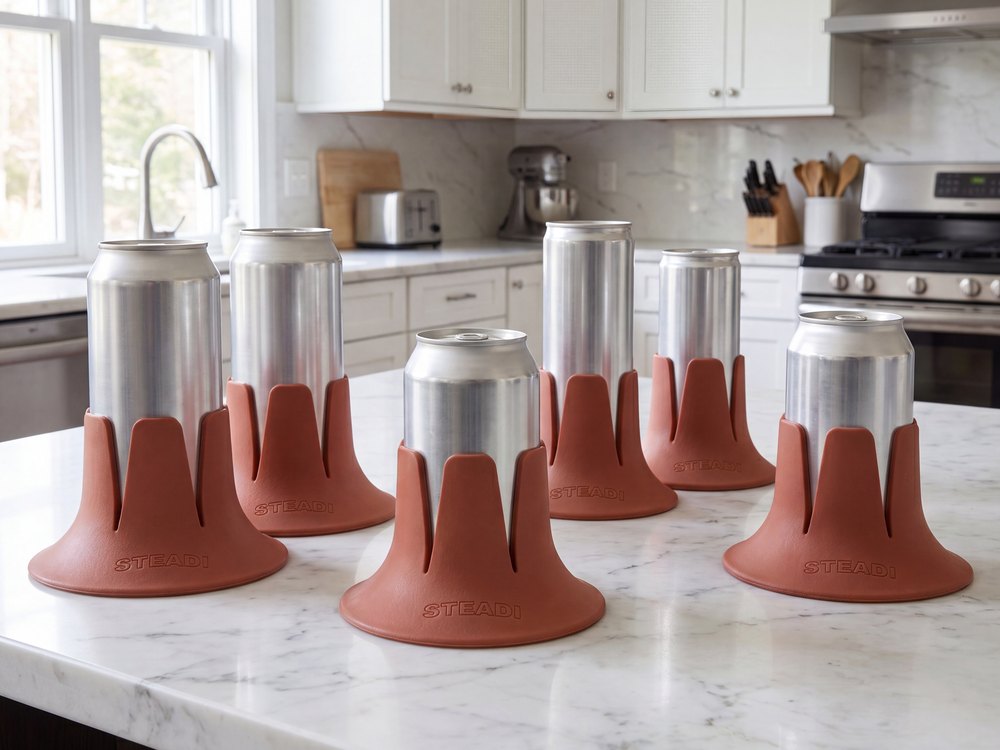
Out on the bucket there is no wall, and there never will be. This is a 5.2″ moulded base that stands on the lid instead, and lifts straight back off.

4.9 average · 121 reviews

See the packs

from $14.95 · free shipping on every order

Ships from Orange, California. 90 days to change your mind, used is fine.

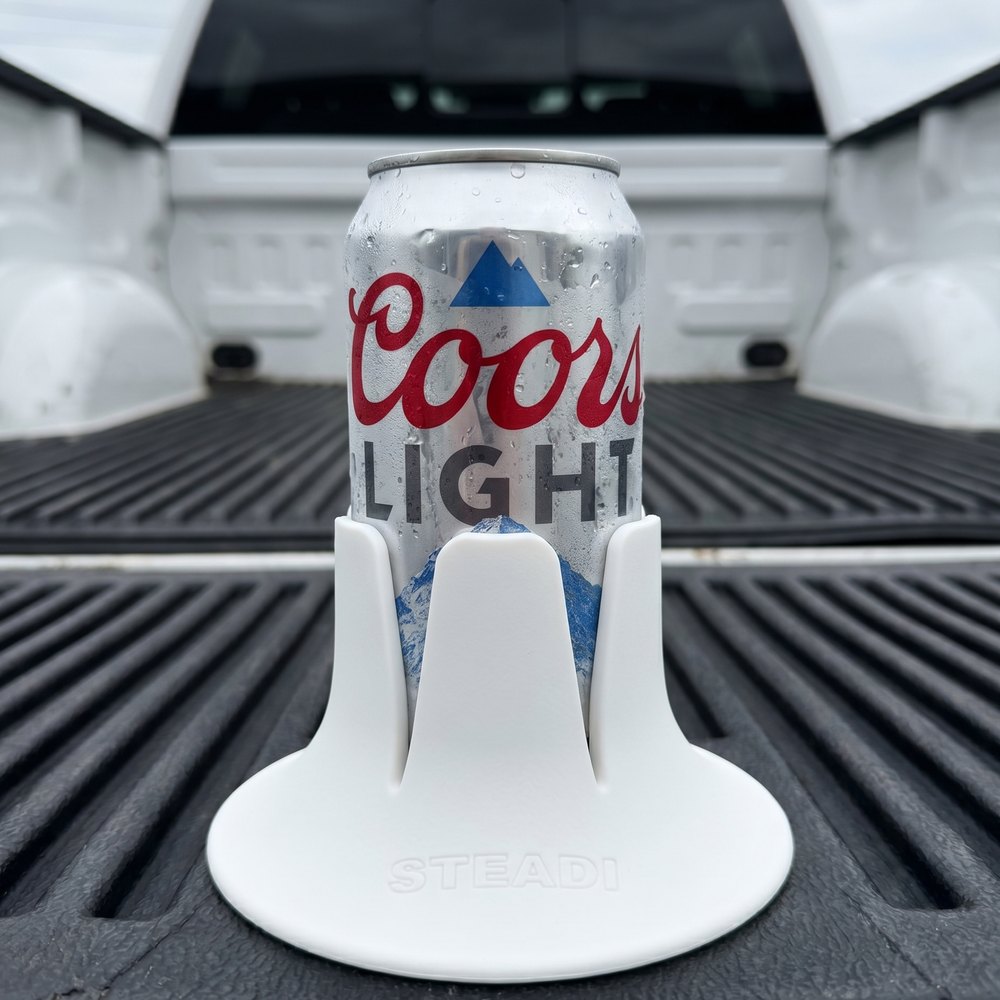
A Coors Light can standing in a white Steadi on the ribbed liner of a truck bed.
In the bed of the truck, on the ribbed liner. Twelve colours in all.

Read this before anything else

The gear companies are not being lazy. They cannot invent a wall that is not there.

Here is the whole menu, priced off the sellers’ own pages on 4 September 2026. If you fish a hub or a wheelhouse you can stop reading right now, go buy one of these, and be done with it. That is the honest start.

Clam · ClamLock

$14.99

needs a hard surface

Powder coated steel, on sale from $19.99, rated to a 32 oz insulated mug. Mounts to a hard surface, or to the centre hub of a hub shelter once you pull the hub plate and bolt and put an accessory plate on in their place.

Otter · QA Dual

$20.00

needs a vertical wall

Moulded Nylon 66, packed with two Quick Attach mounts. Otter’s own writeup of the line says it is for “your Otter hub, wheel house, skid house, or similar structures.” The product page adds “any vertical wall surface.”

Eskimo · E-Hub

$21.99

needs a permanent base

A permanently mountable base plus two adapters — a flat one for 90-degree mounting on a vertical surface, and an angled one to bring the cup level on a flared hub wall.

Or on the lid

$14.95

needs a flat surface under it

A 5.2″ moulded base, about 3.6 ounces, that the drink stands in. The bucket lid is enough. So is the shanty floor, and the plywood in the wheelhouse.

Read that list twice. Hard surface. Centre hub. Vertical wall surface. Wheel house, skid house. An angled adapter for a flared hub. Every item on it is a way of hanging a cup off something rigid that somebody else built — and so is nearly everything else on that shelf. Cold Snap’s rod clamps, $16.98 for four, come in three sizes, and the sizes are pole diameters: 3/4″ for Clam Scout and Eskimo lower poles, 7/8″, and 1-1/4″ for the upper poles on bigger Frabill, Otter and Clam X-series portables. That is not a rod holder. It is a way of gripping a tube.

And the tube is legally required to fold. Minnesota’s definition of a portable shelter, in the DNR’s own words, is “a shelter that collapses, folds or is disassembled for transportation.” The same agency sets the dates it all comes off: inland waters south of the dividing line on 2 March, north of it on 16 March, border waters from 20 February on the Iowa side to 31 March on the Canadian. So the structure you would fasten something to is defined by statute as a thing that collapses, and required to be gone by a date in the spring. That is a hard ceiling on how much furniture ever gets built into one, and it is why the seat you sit on does not have a drink holder either.

Sources: clamoutdoors.com · otteroutdoors.com · scheels.com (Eskimo model 44631) · thornebros.com · coldsnapoutdoors.com · dnr.state.mn.us. Prices, product copy and rules fetched 4 September 2026.


The tell that this is real

You are standing on the only floor in the country people deliberately cut holes in.

  • Common auger sizes run 6, 8 and 10 inches, with 8 the usual all-around choice. Every hole you cut is a hole a drink can go down, and it does not come back. Nobody can engineer around that.
  • Snow is heavy. Load enough of it onto a sheet of ice and the sheet bends into, in Outdoor Canada’s words, “a saucer-like shape, forcing water to seep up through the many cracks, crevices and old ice fishing holes.” The snow on top then “acts like a down-filled jacket” and keeps that water from freezing. That is slush, and that is why your boot prints fill in.
  • Where the ice moves instead of bending you get ridges and heaves. The Minnesota DNR puts the range at “from a few inches in height to over 10 feet high,” and notes they “can form in a matter of hours.”
  • Where slush refreezes you get white ice, which the same agency says is only about half as strong as new clear ice.

Then the temperature, which is the part nobody thinks about. The ice is at 32 degrees at its very warmest, usually well under, and it is attached to a lake — an effectively bottomless heat sink. Setting a hot coffee down on it is not storage. It is a chiller plate.

The air is no help either. International Falls’ 1991–2020 January normals are a 15-degree high and a 7-below low. Your coffee is going cold from the bottom up while you are watching the top of it steam.

Add the small stuff nobody writes standards about. Auger chips frozen into a collar around every hole. The slop you sling out with the skimmer. Refrozen boot prints and drifted snow, and whatever four hours of propane does to the floor of a heated shanty.

Nobody wrote a cup holder for that surface because that surface is not a floor. It is the material you are working.

Sources: dnr.state.mn.us · outdoorcanada.ca · usclimatedata.com (NOAA 1991–2020 normals) · tetrahook.com. Fetched 4 September 2026.

Does it actually work

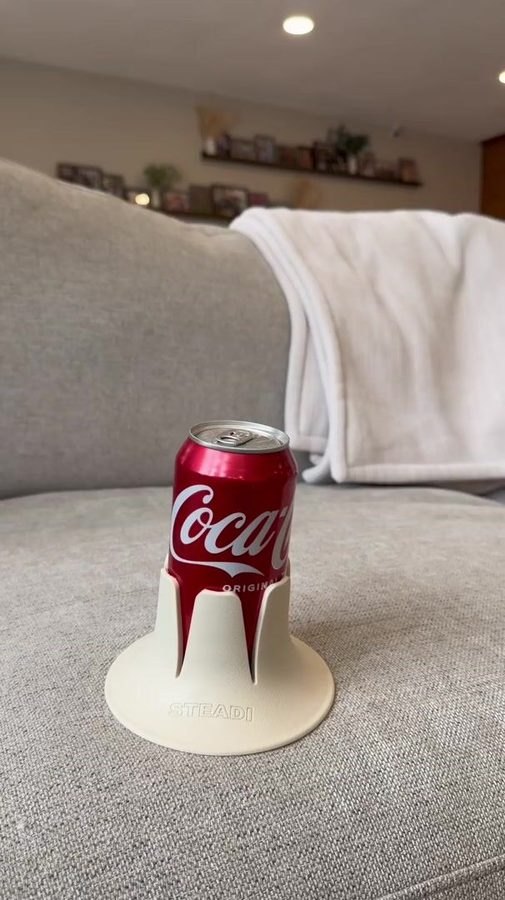
A full can, and somebody sitting down beside it.

It wobbles, then it settles. The base is 5.2 inches across and spreads the load instead of balancing the drink on its own bottom — which is the whole difference between this and a bracket.

Filmed on a couch cushion — a soft, uneven surface, not a bucket lid and not a shanty floor. It is the honest test we have on video and we are not going to pretend it was shot on a lake in February.

A full can standing in a white Steadi on a couch cushion, a living room behind it.
Real footage, one take, no cuts.

Why width works where a bracket cannot

A bucket lid is round, ribbed and crowned. Nothing on it is flat.

A standard five-gallon pail is about 12.19 inches across the top and 14.5 inches tall. The lid is round, ribbed and crowned, with a raised rim — and if you have a seat on it, you took a domed surface and made it a soft domed surface. It holds you up. It was never asked to hold anything else.

The 5.2 inches is the whole mechanism, and it is fixed. It puts a wide footprint under a narrow container, so the drink’s centre of mass has to travel much further sideways before it clears the edge of its own support. Tipping takes a far bigger shove than it does off the cup’s own bottom. It resists tipping. It does not prevent it, and we are not going to say otherwise.

The tack of the TPU is the other half. A sweating tumbler on smooth, cold, crowned plastic slides before it tips, and at 2.8 inches tall this is a lot of rubber sitting against that lid.

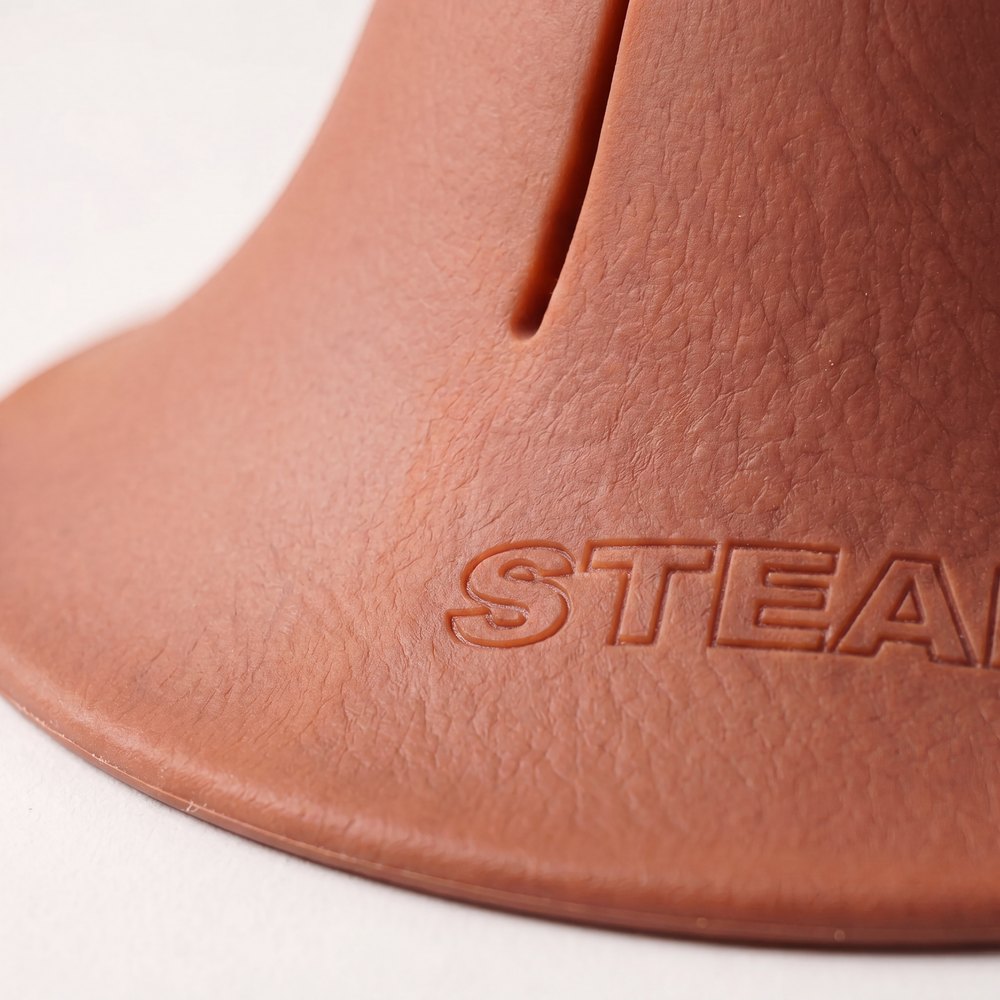
Macro of the flared base and the moulded STEADI mark.
The flare is the mechanism. 5.2 inches across, 2.8 inches tall.

Bucket dimensions: pailhq.com published specification. Fetched 4 September 2026.

The object

One moulded piece. Nothing in it to snap.

A can sliding down into the six fins of the Steadi.
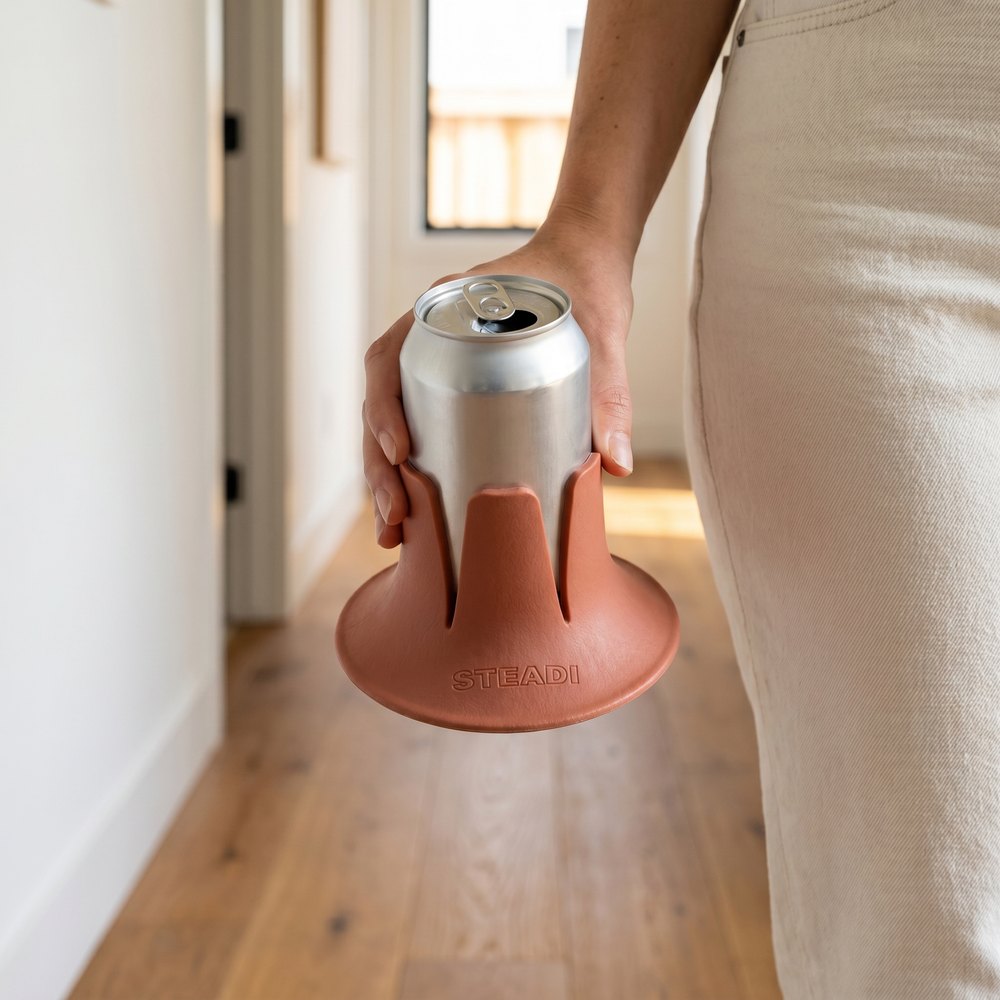
Cans and bottles slide on over the top. Tumblers and glasses drop in.
  • 5.2″ base — fixed. It does not size itself to the cup, because there is one size.
  • 2.8″ tall, and 1.64″ across the opening at rest.
  • Six fins that flex from 0.92″ to 3.15″, which is the whole fit range.
  • About 3.6 oz. Shore 85A thermoplastic polyurethane, one piece, 100% BPA free.
  • No hinge, no spring, no clamp, no bolt, no hardware. Those are the parts that fail first on cheap gear, and there are none of them in it. It folds into the bait box for the ride out, the same way the shanty folds flat.

What we will not do is imply a cold rating we have not measured. We have published no low-temperature test data. What we can tell you is what is in it: one piece of TPU and nothing else.

What seats and what does not

Settle it at the kitchen counter tonight, before the sled gets loaded.

Measure across the bottom, not the rim. A Stanley Quencher 40 oz at a published 3.1″ base seats. A Quencher 30 oz at a published 3.15″ is at the very top of the fin range — worth checking your actual tumbler rather than guessing at the landing. Cans, bottles and the common 20 to 30 oz insulated tumblers are all well inside it.

A handled camp mug does not seat at all: the handle lands exactly where the fins grip. Stemmed glasses do not seat either, which is not your problem out here, but it is true.

Search by container

Every width below comes from a published specification, not from us. Where a spec is uncertain, the answer says so.

Or the width across the bottom

A width across the bottom of the cup, in inches.

A row of cans and bottles the opening accepts.
Cans, tallboys and bottles, all inside the fin range.

Without a tape measure

A standard sticky note is three inches square. Stand the tumbler on one at the kitchen counter: base inside the paper, it seats. That is the whole test, and it takes ten seconds while the coffee is on.

Anything that overhangs, or anything borderline — hello@steadilabs.com reaches a person, and the answer will be honest either way, including a no.

Where it goes

The lid, the shanty floor, the sled tub parked beside your bucket.

A 5.2-inch base sits well inside a 12-inch bucket lid, crown and all. It sets down on the floor of a flip-over, on the plywood in a wheelhouse, in the sled tub once the sled is parked next to you, or on the bench in a hub. Then it lifts straight back off and goes in the bait box.

The moment this is built for is the one after the sled is parked and the shelter is up. Not the tow out. Everything gets packed for the tow out, this included, and any page that tells you different is selling you something.

And not at the hole. Keep it back where you keep your phone and your keys, because it sinks and there is no version of this product that does not. The floor is the lake, and the lake has holes in it that you drilled.

Twelve colours, one per unit — which is the fastest way to stop four guys in one hub arguing about whose coffee is whose in the dark.


What the shelf costs

Everything else on the shelf needs something to bolt to.

Prices and requirements were looked up on 4 September 2026, not estimated. Every figure in the last column is the seller’s own published requirement, in the seller’s own words where it is quoted.

The productPriceWhat it asks of you
Clam ClamLock Cup Holder$14.99A hard surface — or the centre hub of a hub shelter, which means pulling the hub plate and bolt and fitting an accessory plate in their place. On sale from $19.99. Rated to a 32 oz insulated mug.
Clam ClamLock Double$39.99 + $12.99A ClamLock baseplate, sold separately at $12.99: a round black plate with two brass threaded inserts, which has to live somewhere permanently.
Otter QA Dual Cup Holder$20.00“Your Otter hub, wheel house, skid house, or similar structures,” in Otter’s words. The product page adds “any vertical wall surface.”
Eskimo E-Hub Cup Holder$21.99A permanently mountable base, then a flat adapter for a vertical surface or an angled one for a flared hub wall.
Eskimo E-Hub Bucket Base, two$9.99Straps to the bucket and stays there — on the thing you sit on, carry bait in and throw in the truck bed. Genuinely good if you fish one bucket the same way every trip.
Lee Fisher Essential Bucket Lid$18.50That you swap the lid. The drink hole is moulded into the thing you are sitting on, or lifting to get at bait.
Frabill Sit-N-Fish$54.99A whole new six-gallon bucket. Frabill’s own words: “Beverage holders on inner bucket lid” — under the cushion.
Cold Snap Rod Clamps, four$16.98A pole of the right diameter: 3/4″, 7/8″ or 1-1/4″. Not a drink holder at all, but it is the same bargain — bring us a tube.
The Ice Fishing Cup Holder$14.95 · four for $39.95, $9.99 eachA flat surface under it. The bucket lid is enough.

Three honest concessions, because you have bought enough hardwater junk to have earned them.

If you fish a hub, a wheelhouse, a skid house or a flip-over with a tub wall beside you, buy theirs. Buy the ClamLock, the Otter QA or the Eskimo E-Hub, fasten it once and forget it, because nothing standing loose on a surface beats a bracket bolted to something solid. The drink-hole lids are legitimate too — Lee Fisher and Frabill both solved it, with the trade named above. And we are not the cheapest thing on that list. Eskimo’s bucket base two-pack is $9.99.

What survives all three is one specific trip: off the bucket at first light, sixty yards from the access, eight tip-ups out and the bite happening right now — nothing to fasten to, because the entire point of fishing that way is that you brought nothing to fasten to.

Sources: clamoutdoors.com · otteroutdoors.com · scheels.com · joessportinggoods.com · thornebros.com · leefishersports.com · frabill.com · coldsnapoutdoors.com. Prices and specifications fetched 4 September 2026 and current as of that date. Steadi Labs is not affiliated with any of them.

Get one

How many ride out with you, and what colour on whose bucket.

Count the guys who actually go. For most people that is two or four. Free shipping on all of them.

Checkout is handled by Steadi Labs — the company that makes The Ice Fishing Cup Holder. Secure checkout at steadilabs.com. Free shipping on every order, and 90 days to change your mind, used is fine.

From people who bought one

Not one of these is from the ice. We are not going to pretend otherwise.

Verbatim, unedited, not filtered by rating. This is a slice of one product-wide corpus — reviews of the Steadi, not of this page. Nobody in it mentions a shanty, a bucket or a lake in winter, and if we stretched one to fit you would be right to assume the rest of the page was stretched too. The four below are here because they describe the mechanism this page is claiming: a wide base on a surface that is not a table, and a drink that survives somebody moving beside it.

A sage-green drink base holding a stainless tumbler wrapped in a dog-print design, standing on a white slotted serving tray on a soft grey blanketed surface in a living room
Photograph sent in by Customer with this review.

★★★★☆

The Steadi is everything you claimed. I place a tray on the couch cushion next to me with the Steadi, while watching TV. It’s so stable that it doesn’t budge when I get up and sit down. Is the Steadi dishwasher and/or microwave safe.

Customer · July 2026Photo from the buyerPhoto from the buyerPhoto from the buyerPhoto from the buyerPhoto from the buyerPhoto from the buyerPhoto from the buyer

★★★★★

Steadi works very well in stabilizing my drinks on soft surfaces, like the couch or by the chair I use as a nightstand.

Marie Adams · July 2026

★★★★★

Really does keep your drink cans and bottles from tipping over! We are quite impressed with these!

SPK · July 2026

★★★★★

Genius! Finally I can sit in a corner of the couch and have my drink next to me. Works beautifully, sturdy and stable. I’m very happy I found this item.

jlhinckley · July 2026

18 more, photographed by the people who bought them

Sent in with their reviews. Tap any one to read it. Different rooms, different drinks, different colours — none of them staged by us.

The four-star is first on purpose. It is the one that describes somebody getting up and sitting down beside the drink without it moving, which is the closest thing in the whole corpus to a boot bumping a bucket.

Read this before you buy, including the part that costs us the sale

What it will not do.

Ninety days

Ninety days is most of a hardwater season.

Ninety days from delivery, used is fine. Buy it in December and the window is still open past the day the state makes you drag the shelter off the lake. That is long enough for a cold snap, a slush day, a tow out and a morning where nothing bit.

If it turns out the wall in your hub was the better answer all along, send it back. No forms, no fight.

Who makes it

Moulded in Orange, California.

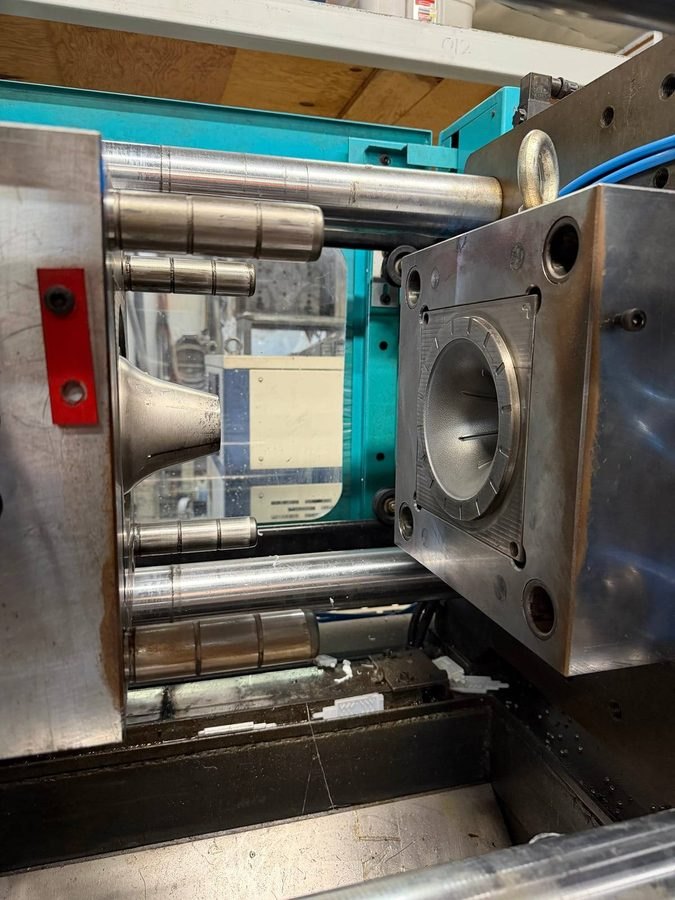
The steel injection mould open in the machine.
The steel tool it comes out of.
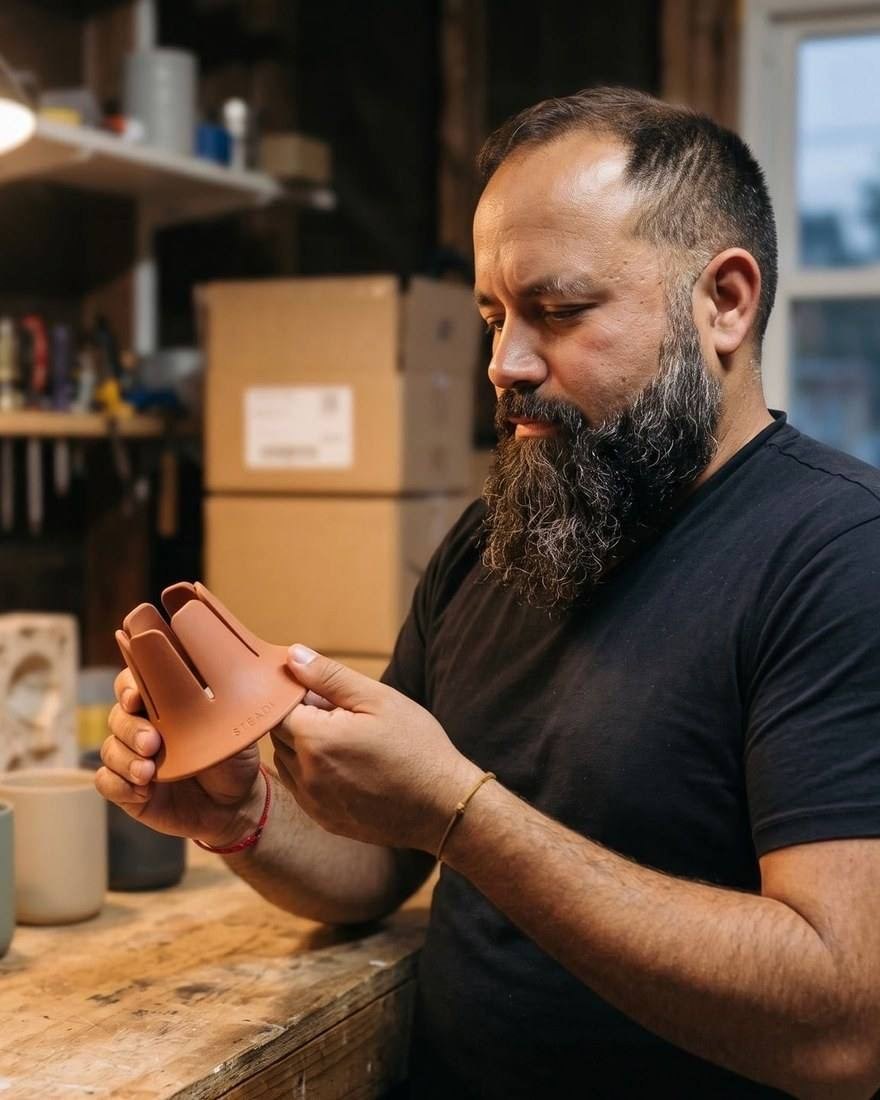
Scott Rodriguez at a workbench holding a terracotta Steadi.
Scott Rodriguez, who designed it.

Asked and answered

The questions that decide it.

Will it clamp to my shanty pole?

No. Nothing clamps and nothing drills. It sits free on the bucket lid, the shanty floor or the plywood, and lifts straight off. If a bracket on a pole is what you actually want, Clam, Otter and Eskimo all sell one for about twenty dollars and they are good at it.

Will it keep my beer from freezing?

No. Nothing does at seven below. What it does is get the can up out of the slush so it is not going cold from underneath as well as from the top. The rest is on you to drink faster.

Does it work with mittens on?

The fins grip the bottom inch of whatever is set in, so your hands are not the thing keeping the drink upright between sips. Getting a bare thumb under a 40 oz tumbler to lift it back out is still a two-hand job with big mitts on, and we are not going to claim otherwise.

Is it going down the hole?

It can, and it sinks. Nothing about it floats or stops that. Keep it back from the hole the way you keep your phone back from it.

Will my Stanley fit?

A 40 oz Quencher at a published 3.1″ base seats. A 30 oz at a published 3.15″ is right at the top of the fin range — one sticky note at the kitchen counter settles it before the sled gets loaded.

Can I leave it in the sled all winter?

It is one piece of TPU with nothing in it to seize, rust or come apart. But we have published no low-temperature test data, so we are not going to give you a number we have not measured. Ninety days is there for exactly this question.

Is it dishwasher safe?

Yes, top rack.

Still deciding

$14.95, against the auger you already bought.

Clam lists the Yukon flip-over at $999.99 and the X-1200 hub at $1,349.99, both fetched the same day as everything else on this page. Whether one of those is in your garage or you put the money into the auger and the flasher instead, fifteen dollars is not the decision here.

If you fish a wheelhouse with real walls, or a hub you are happy putting a plate on, buy theirs and be done. If you fish off a bucket with the shelter left at home, there is nothing on that shelf built for you — and that is what this is for.

The floor out there is the lake.

It is not you, and it is not the gear companies being lazy. Three of them make a good cup holder and every one of them needs a rigid host you did not bring. The state calls your shelter a thing that collapses and makes you drag it off by March. And the one surface always under you is the surface you drill through, that floods with slush when it snows, and that sits at 32 degrees on its best day. You just do not have to keep setting the coffee down in it.

See the packs

from $14.95 — free shipping on every order

90-day guarantee, used is fine · Made in Orange, California